

What does success mean to you?
If you’re like most people, your answer has probably changed dramatically over the years. The promotion you desperately wanted at 25 might feel trivial compared to the work-life balance you crave at 40. The six-figure salary that once seemed like the ultimate goal might pale next to the desire for meaningful relationships — or simply feeling at peace with your life.
This shifting definition isn’t random. It reflects how we grow and change as human beings. But here’s the catch: we keep chasing success as if it’s always just around the corner, creating endless stress and anxiety along the way. What if we’ve been measuring success all wrong?
Success Through the Lens of Erikson’s Stages
Ask a teenager what success means, and you’ll hear something very different from what a grandparent might say. Success isn’t a single, universal idea — it evolves with us. This shifting definition of success isn’t random—it’s deeply connected to where we are in our psychological development. Drawing from Erik Erikson’s stages of psychosocial development, I believe our perception of success is intrinsically tied to the developmental challenges we’re currently facing.
Psychologist Erik Erikson described human development as a series of stages, each with a central challenge. And here’s the key insight: until we resolve the central challenge of our current life stage, success will always feel like something just out of reach, creating chronic stress and leaving our nervous systems in a constant state of activation.
Early adulthood: intimacy vs. isolation
Here, success is often imagined as finding a partner, building friendships, or starting a family. Many young adults link success with independence, financial stability, or career progression. Yet even with money or status, loneliness can keep the nervous system on edge.
Real success shows up when intimacy — being known and accepted — feels possible.
The Success Trap: Always Chasing Tomorrow
How often have you achieved something you thought would make you feel successful, only to immediately set the next goal?
If success always means the next promotion, the next purchase, the next milestone — we get stuck in a loop of longing.
This isn’t a character flaw. It’s the natural result of unresolved developmental needs. When the central challenge of our life stage isn’t addressed, we try to fill the void with external achievements.
That’s the future success syndrome:
“When I get X, then I’ll feel successful.” But X keeps moving further away. We’re trying to solve an internal challenge with external solutions.
The Nervous System Doesn’t Lie
Here’s where conventional wisdom about success falls apart: if financial wealth, career achievement, or social status were true measures of success, then accomplished people wouldn’t suffer from anxiety, depression, or burnout. Yet many do.
Your body tells the truth.
- That tight feeling in your chest when you think about work.
- The inability to relax on vacation.
- The mental chatter about what you should be doing differently.
These are all signals that, despite external accomplishments, something deeper is missing.
Your nervous system doesn’t care about your job title or bank balance. It responds to whether your psychological needs are being met.
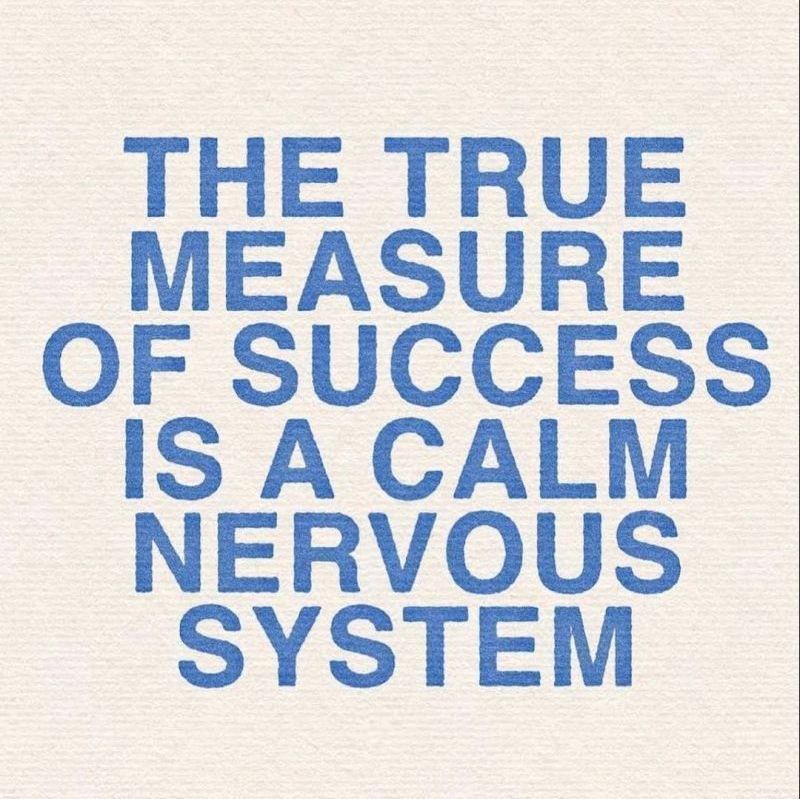
A calm, regulated nervous system — one that isn’t constantly bracing for the next challenge — is the most reliable indicator of genuine success.

The Midlife Awakening
Nowhere is this more evident than in midlife (ages 40–65).
According to Erikson, this stage revolves around Generativity vs. Stagnation. The central question becomes:
“Am I contributing something meaningful to society and future generations, or am I just going through the motions?”
This is why midlife often feels like a crossroads. You might have everything you thought you wanted — the career, the house, the financial stability, the recognition — yet still feel restless or unfulfilled.
That restlessness isn’t failure. It’s growth. What’s happening is that the things that used to motivate you don’t work anymore. The external validation feels hollow. The next promotion doesn’t excite you. Your inner compass is recalibrating, pointing toward something different entirely.
The Illusion of Earlier Solutions
When we feel lost in midlife, we often reach back to earlier definitions of success: a flashy car, a younger partner, a new job title. These may have symbolized success in earlier stages, but they don’t satisfy the challenge of midlife.
The real task is to find our own answers to Erikson’s midlife question:
- Will you stagnate — focused only on yourself, feeling disconnected and unfulfilled?
- Or will you embrace generativity — creating, mentoring, nurturing, and leaving something that outlasts you?
The Calm That Comes From Contribution
When stuck in stagnation, we focus on what we lack. This constant state of “not enough” keeps our nervous system in fight or flight. Always chasing. Rarely resting.
However, when we embrace generativity, something fundamental shifts.
- A deeper sense of purpose: Contributing to something larger than yourself acts as a powerful anchor against the winds of anxiety and aimlessness.
- Internal validation: When success is measured by what you give, your sense of self-worth becomes internally derived. You stop relying on external approval. That shift is inherently calming and empowering.
- Profound connection: Generativity fosters belonging — to community, to future generations, to humanity itself. Connection soothes the nervous system in ways money never can.
The Great Reversal
The surprising truth about real success is that it often requires letting go of what you thought success looked like.
- You might turn down the promotion that would impress others but drain your energy.
- You might choose the meaningful project over the higher-paying one.
- You might prioritize being a good parent, friend, or mentor over being the “best performer.”
This isn’t laziness. It’s wisdom. It’s recognizing that the feeling you’ve been chasing is available right now — through how you show up, not what you acquire.
Your Success Story
Seeing success through a developmental lens removes judgment and comparison.
- A 25-year-old focused on career isn’t shallow — they’re meeting their developmental task.
- A 50-year-old shifting toward mentoring isn’t in crisis — they’re evolving.
Success becomes less about what you own and more about who you`ve become. Less about recognition, and more about impact.
When your daily actions align with purpose, that constant low-level anxiety starts to fade. You feel successful not because of what you might achieve tomorrow, but because of how you’re living today.
The True Measure of Success Is…
I’ve observed something remarkable in people who successfully navigate this midlife transition. They develop what I can only describe as a quality of presence—a calm, grounded energy that wasn’t there before.
Instead of competing with younger colleagues, they mentor them. Instead of hoarding their knowledge and resources, they share them freely. Instead of asking “What’s in it for me?” they ask “How can I help?” Instead of trying to prove themselves, they focus on improving things for others.
And here’s the remarkable part: they seem more successful than ever, even if their bank accounts or job titles haven’t changed. They carry themselves differently. They sleep better. They worry less. They’re present in conversations instead of mentally planning their next move.
The real question isn’t whether you’re successful by society’s standards.
The question is: “Am I addressing the psychological challenges of my current life stage?”
When the answer is yes, your nervous system will let you know — with calm, with presence, with a deep sense of “enough.”
That’s what success feels like from the inside out. That’s when you’ll know you’ve found the real thing.
Feature photo by Abhisek Hazra on Unsplash